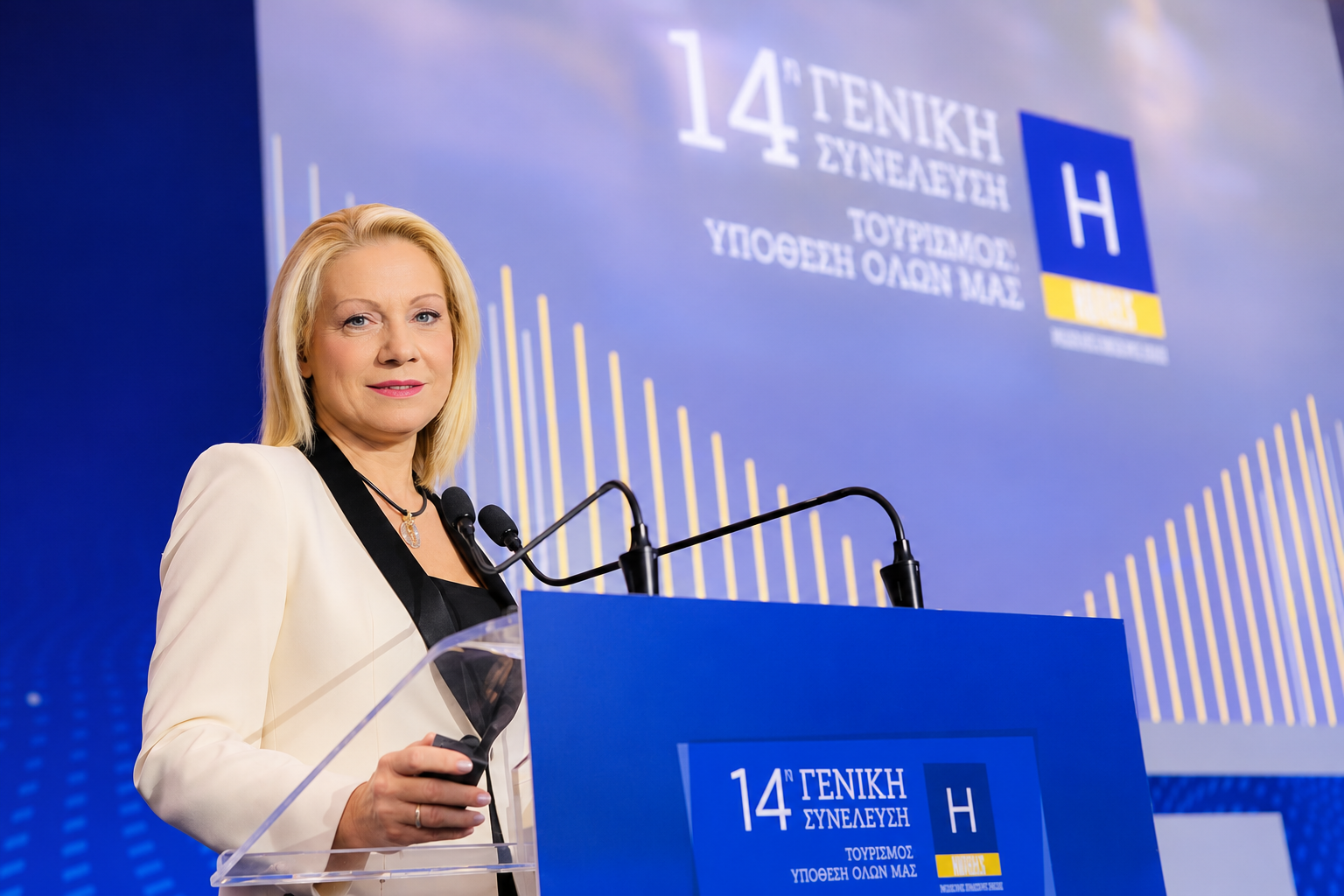
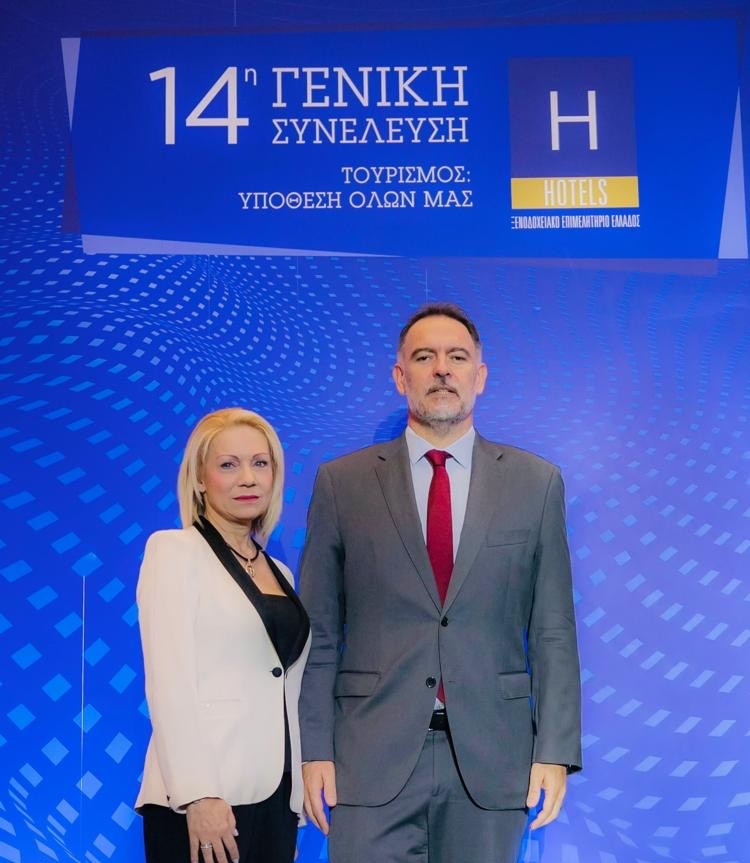
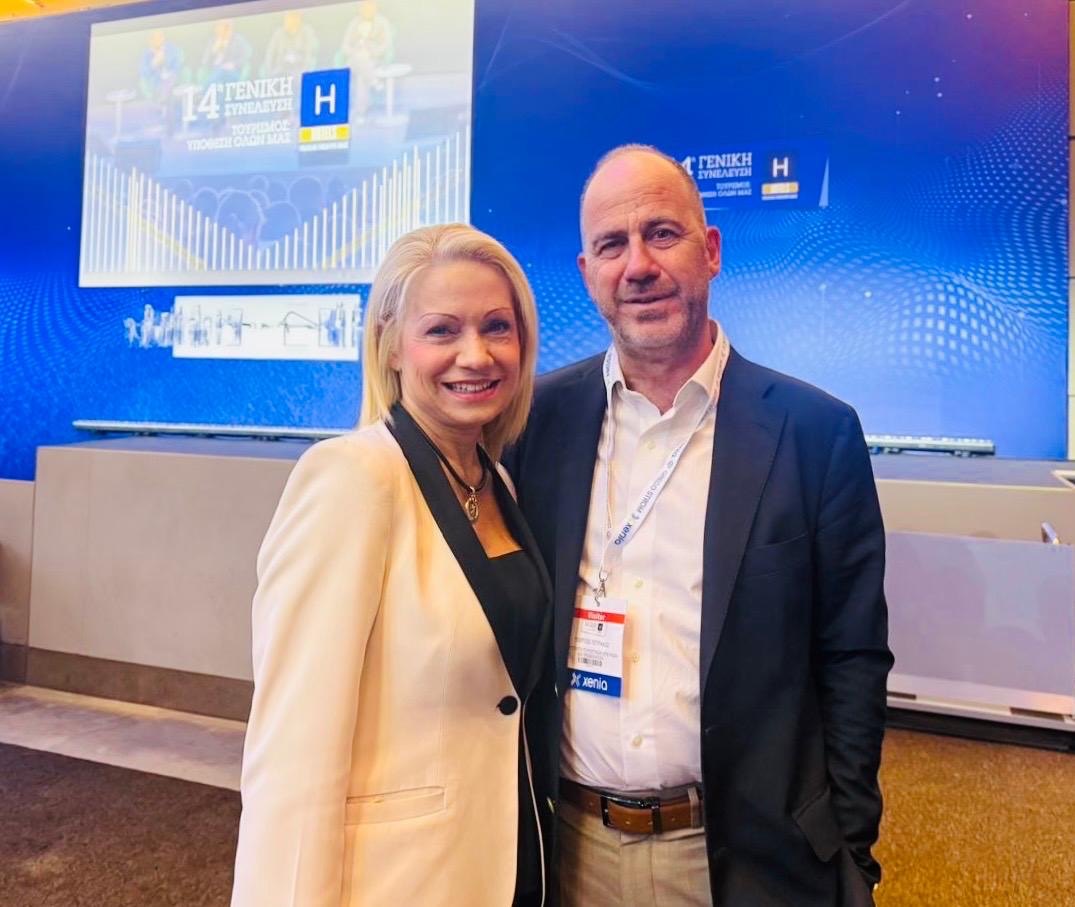
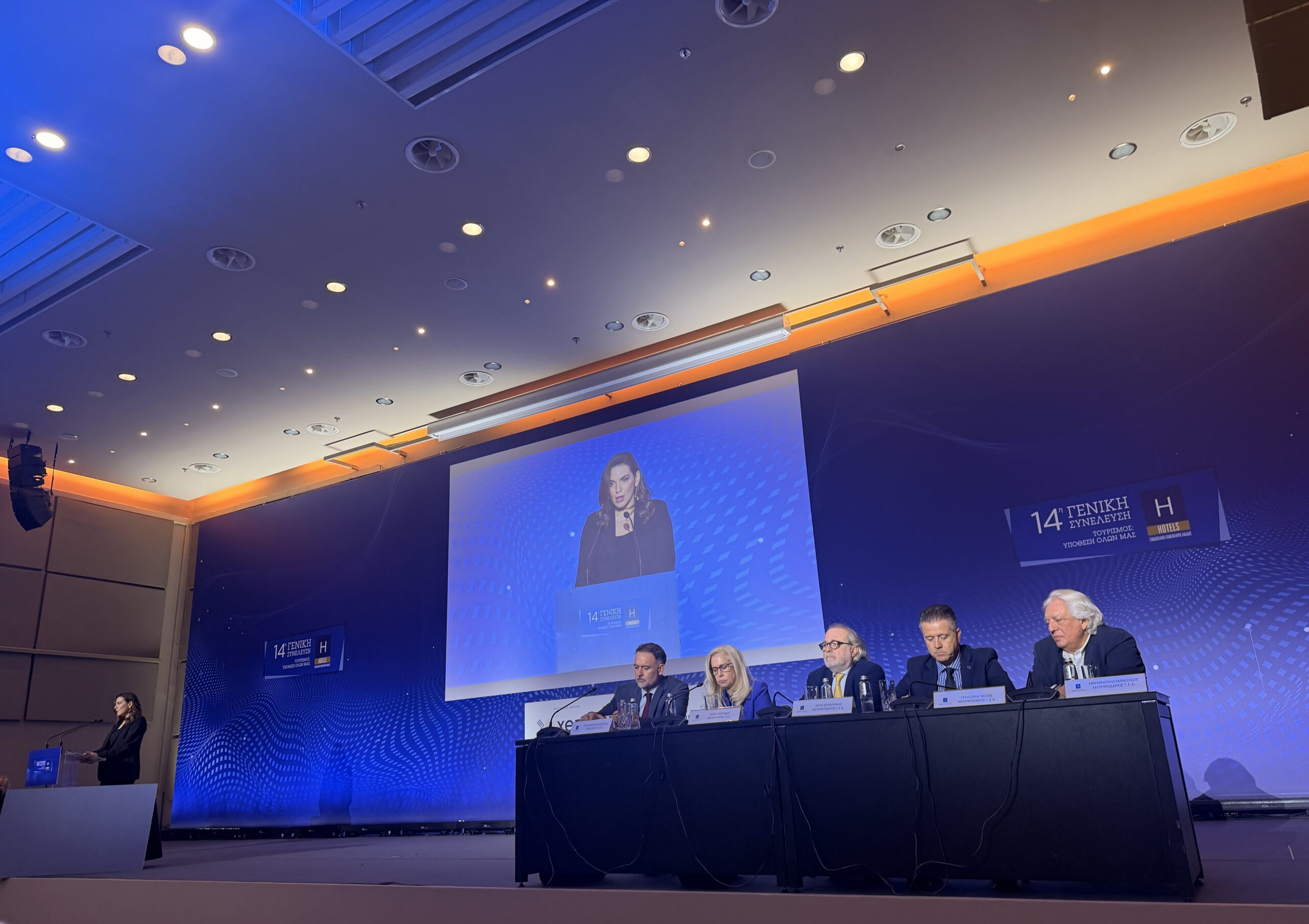
Christina Tetradi, President of RIT, at the 14th General Assembly of the HCH: “Information is power in shaping Greece’s tourism strategy”
Christina Tetradi, President of the Research Institute for Tourism (RIT), highlighted the Institute’s pivotal role in producing reliable data and supporting the evidence-based formulation of the national tourism strategy during her address at the 14th General Assembly of the Hellenic Chamber of Hotels (HCH).
As she emphasised, RIT, which marks 30 years of operation, was established with the vision of actively contributing to the development of the national tourism strategy, building on a foundation of evidence-based knowledge. As she noted, this vision is more relevant today than ever, as the effective management and development of tourism requires systematic measurement, a deeper understanding and timely interpretation of the sector’s data.
“Simply put, we are talking about turning information into a source of strength for our benefit,” she remarked, defining RIT’s role as that of the scientific mechanism through which tourism becomes a measurable reality. In particular, she referred to the production of primary data, the identification of trends, the measurement of performance, the analysis of behaviours, the assessment of impacts and the forecasting of changes, with particular emphasis on the contribution of the panel survey to capturing market conditions in near real time.
“At RIT, we do not simply monitor tourism. We decode it,” she noted, stressing that an in-depth understanding of data is an essential prerequisite for the effective formulation of policies and strategic choices.
She made particular reference to the Ministry of Tourism, under the leadership of Minister of Tourism Olga Kefalogianni, pointing out that RIT’s research, data and analyses are effectively utilised, through the HCH, and incorporated into the Ministry’s strategic planning. As she noted, evidence-based knowledge is regarded as a “prerequisite for policymaking” rather than merely a complementary element, contributing to the formulation of policies based on knowledge rather than assumptions.
Referring to the conditions of this year’s tourism season, the President of RIT stressed that significant disruptions, uncertainty and instability in demand had further highlighted the need for the timely use of available data in business and strategic decision-making. “Forecasting is not a luxury. It is a prerequisite for strategic preparedness,” she emphasised.
She also highlighted the importance of hoteliers’ participation in RIT’s surveys, as their experience and the data derived from the day-to-day operation of their businesses provide a valuable source of information for identifying the actual needs, challenges and problems facing the sector. Research findings are translated into evidence-based proposals submitted by the HCH to the State, support the advancement of institutional initiatives and contribute to the design of measures that address the actual needs of the hotel market.
As Ms Tetradi pointed out, the data provided by hotel businesses are transformed into knowledge, which is then shared with hoteliers themselves, enabling them to assess their position in the market, as well as with Hoteliers’ Associations, supporting the formulation of policies and proposals.
The President of RIT also highlighted the crucial contribution of the Institute’s research team to carrying out and further developing its research activities. In particular, she referred to the General Director, Professor George Petrakos, research analysts Sofia Panousi, Dora Nikou and Stavroula Athanasakopoulou, research analyst Dimitris Gousopoulos, and RIT’s scientific associate, Assistant Professor George Soklis, as well as the extensive network of scientific associates supporting the Institute’s research activities.
She also expressed her gratitude to the Hellenic Chamber of Hotels, its Board of Directors and its President, Mr Alexandros Vassilikos, for their continued support and excellent cooperation, as well as to the members of RIT’s Board of Directors, Mr John Agglos, Mr George Zafeiris, Mr Sakellarios Soulounias, Mr Xaralambos Voulgaris, Mr Apostolos Doxiadis and Mr Gerasimos Zacharatos, for their ongoing contribution to this collective effort.
In closing, Ms Tetradi stressed that the further development of Greek tourism cannot be assessed solely in terms of its growth, but must also take into account the quality and maturity of its management. “Tourism will be judged not only by how much it has grown, but also by the maturity with which we have managed it,” she concluded, setting a shared goal of a more modern, dynamic, efficient and resilient Greek tourism sector.
Gallery